
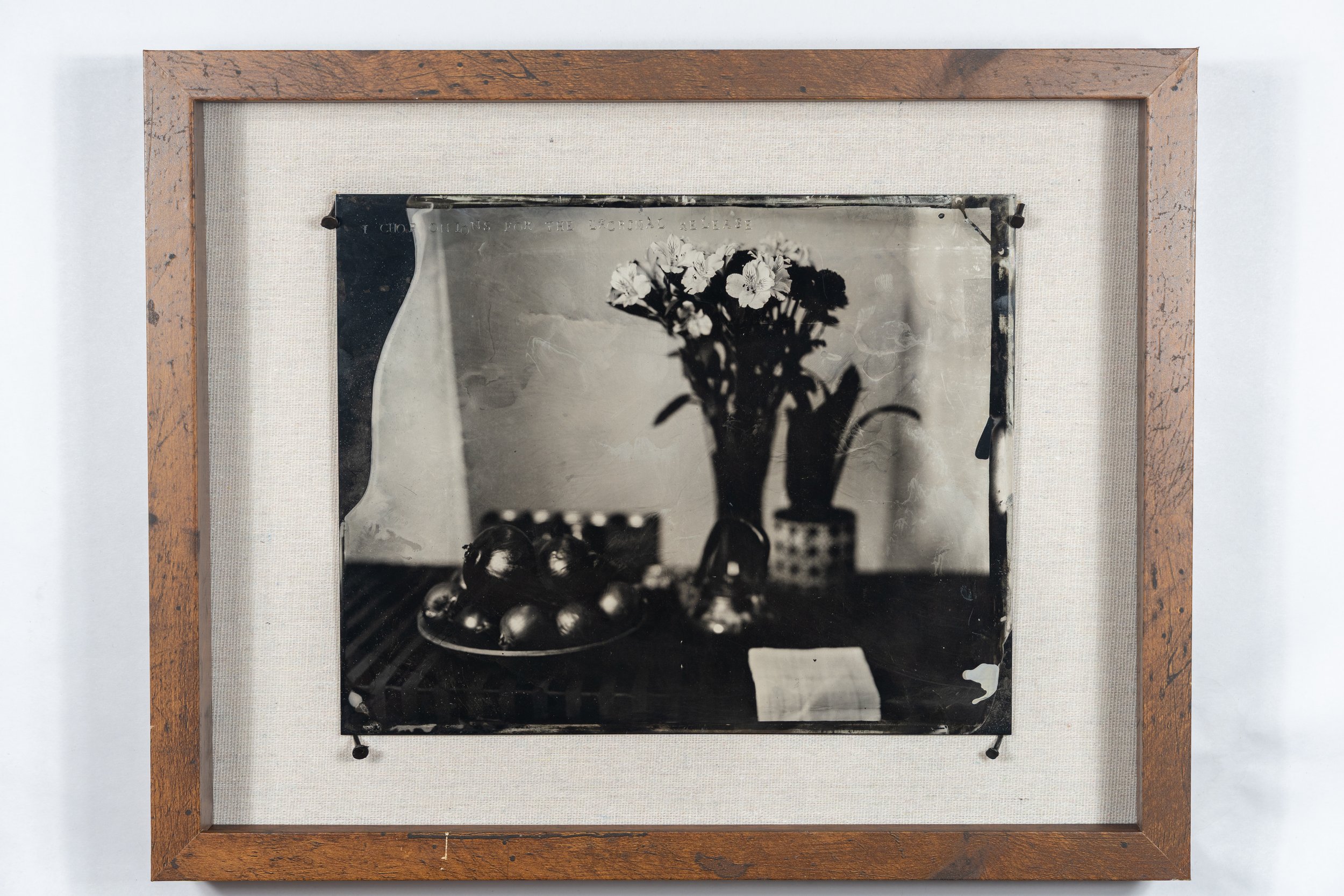
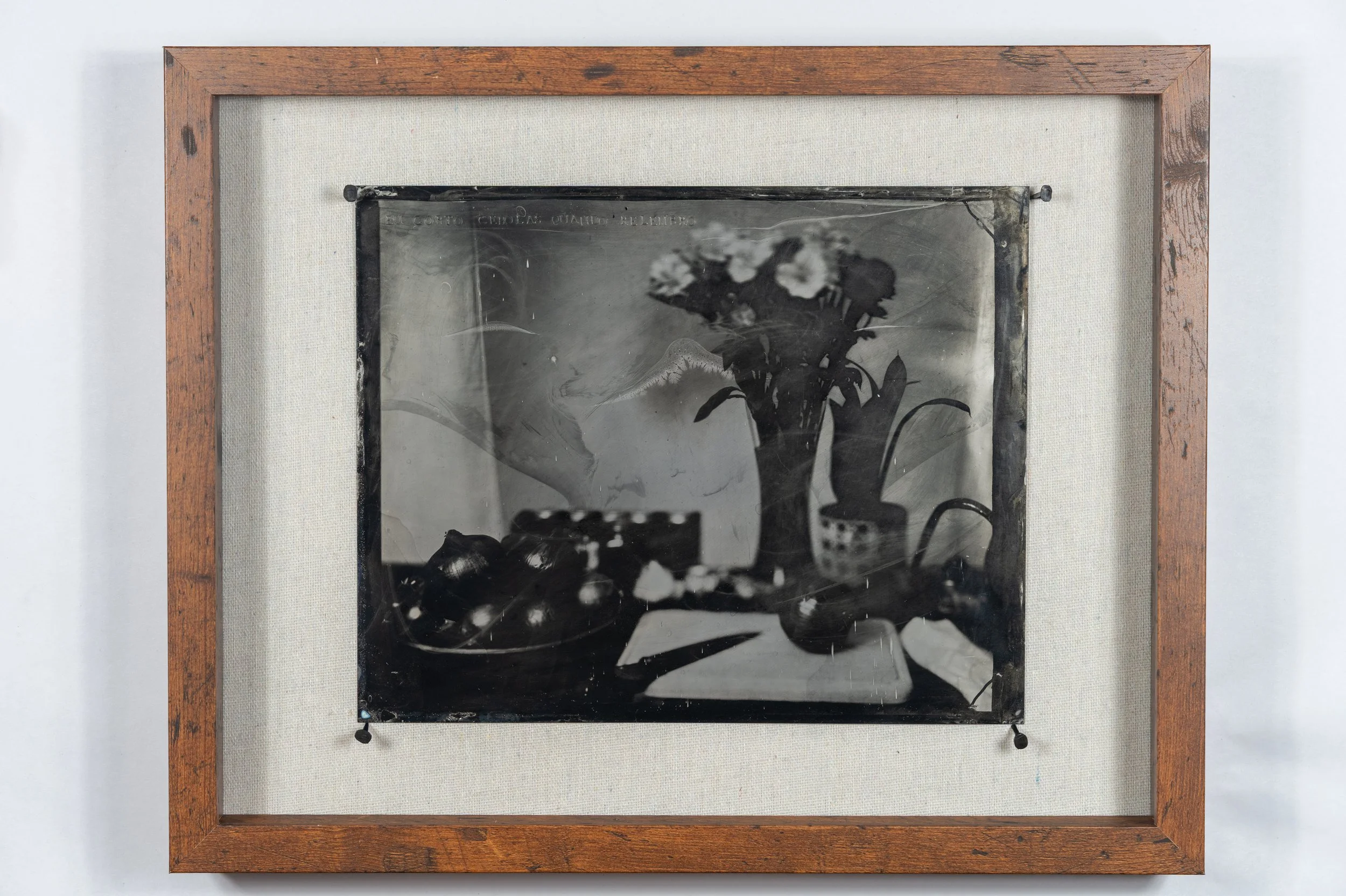
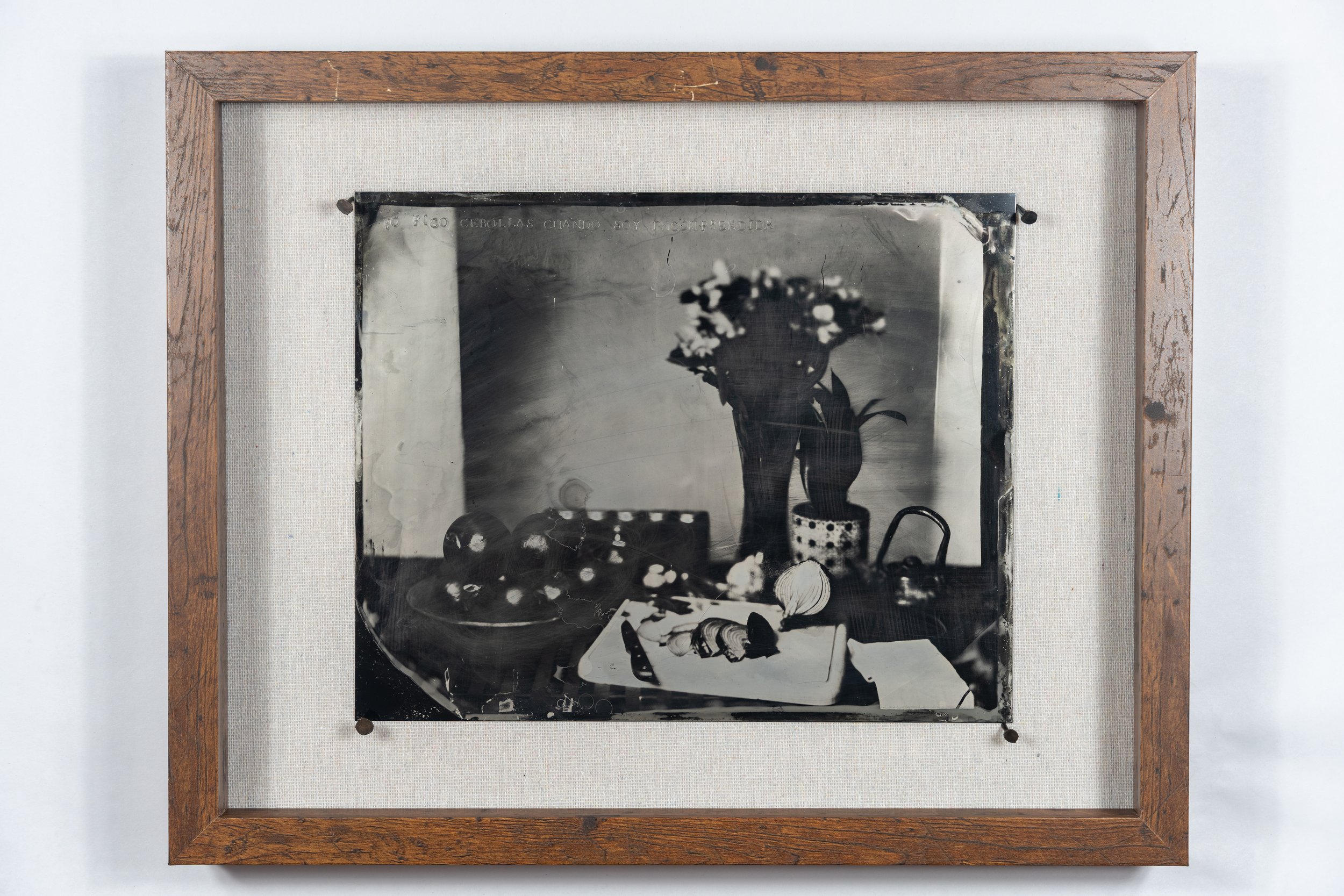
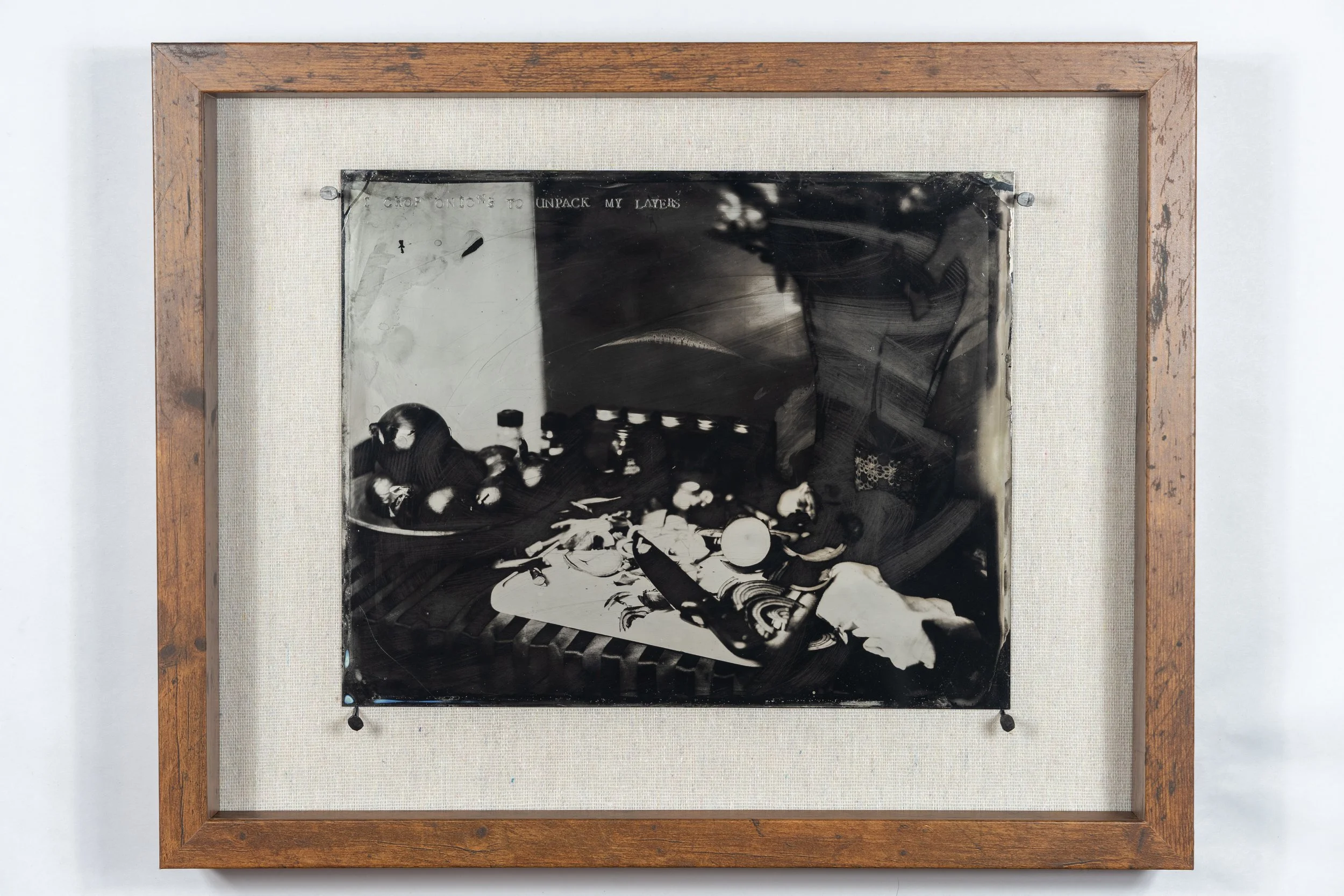



Lacrimal Release
Amelia takes care of her family. Her husband has a successful career. She ensures his shirts are perfectly pressed and he is groomed for his important meetings.
Amelia is glad her children are on a good path. They will thrive. Just like dad.
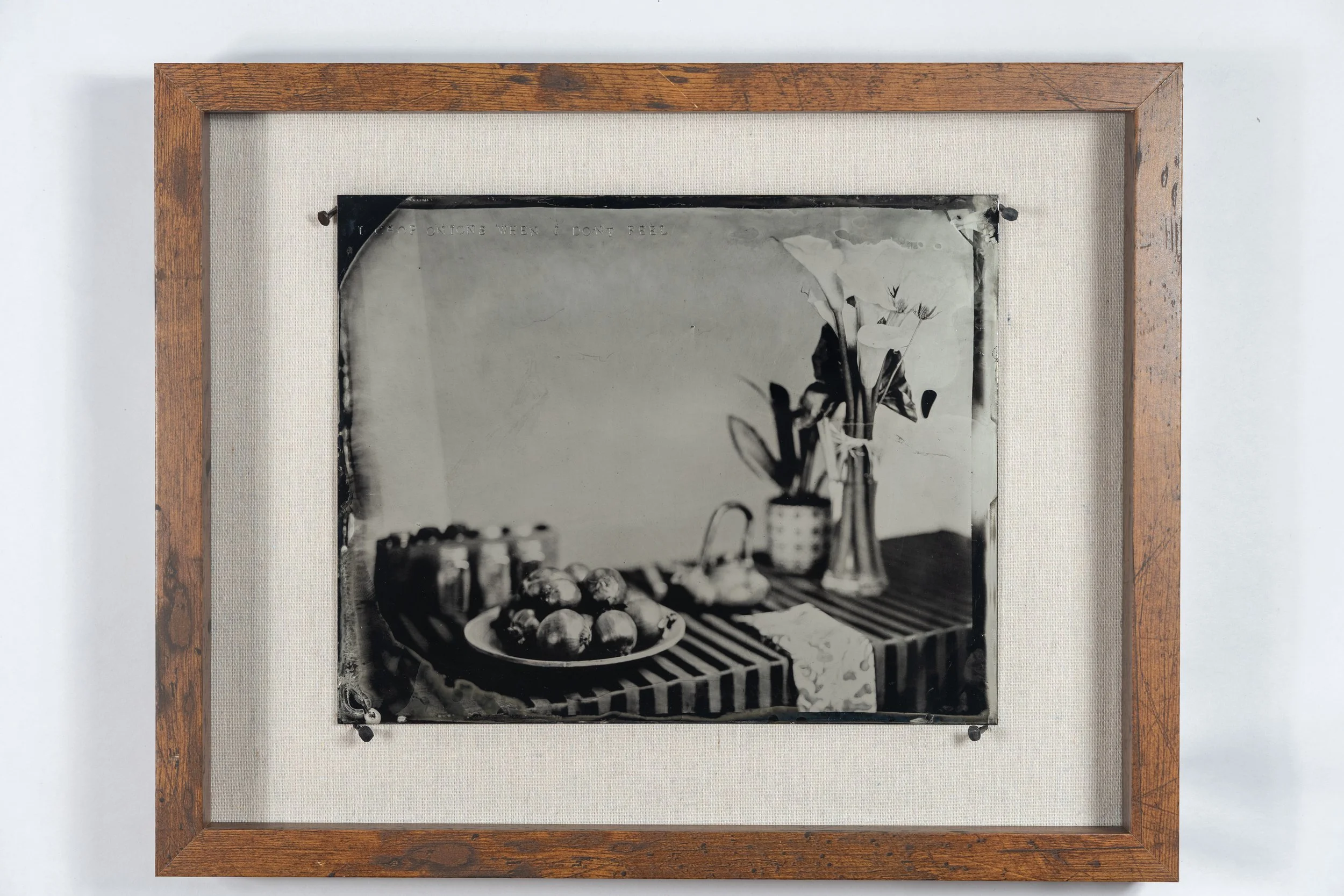
Sometimes she feels suddenly upset. She doesn't know why. She has a perfect life, with a great man and beautiful, healthy kids. When she cries, they will dismiss her. Why would she wipe out having such a perfect life, they implicate with her. Honey, you're being so dramatic, her husband complains.
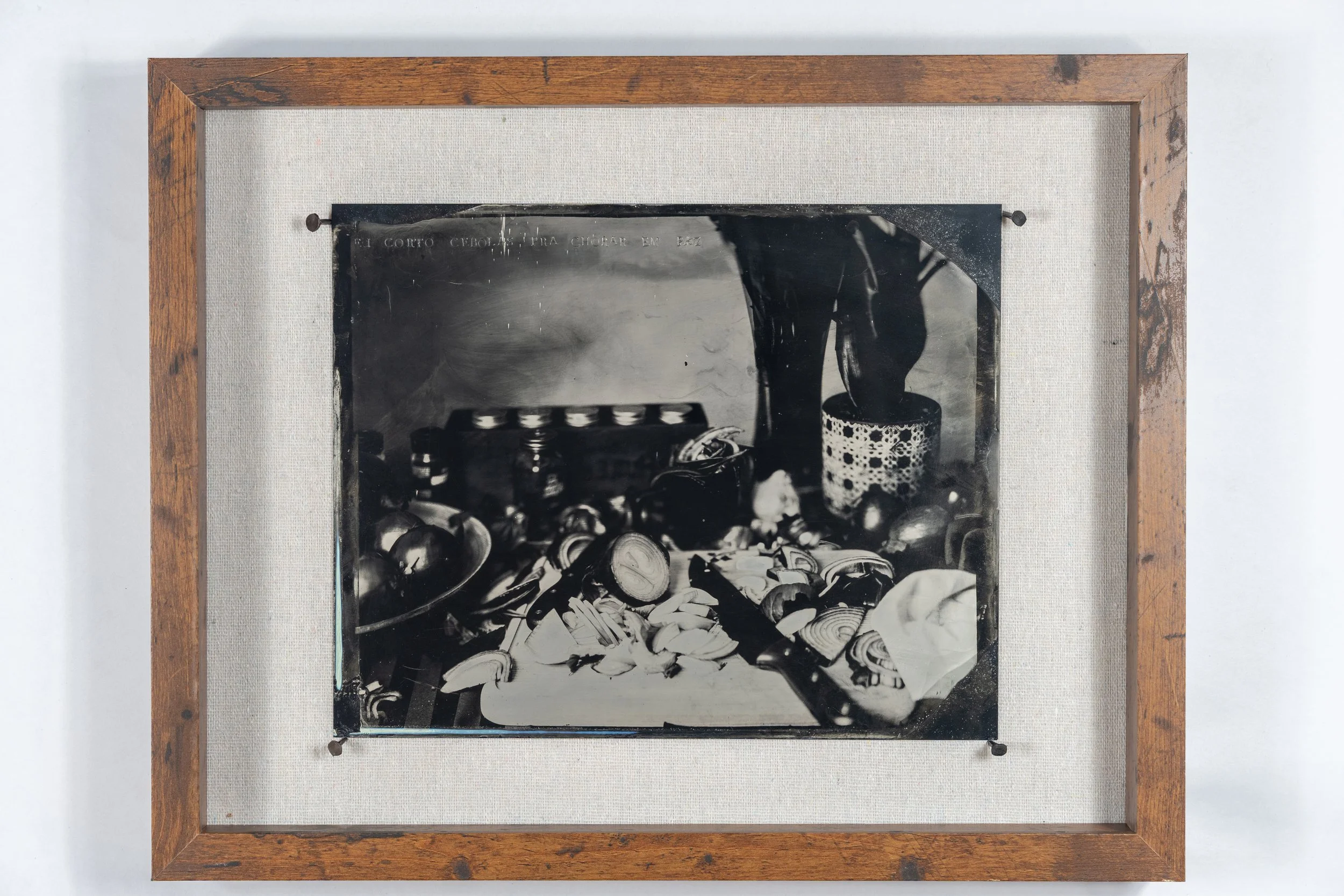
But Amelia found a strategy. She is smarter than they can tell. Chopping onions is her release valve. No one can dismiss her. It's just physiological. Onions make people cry.
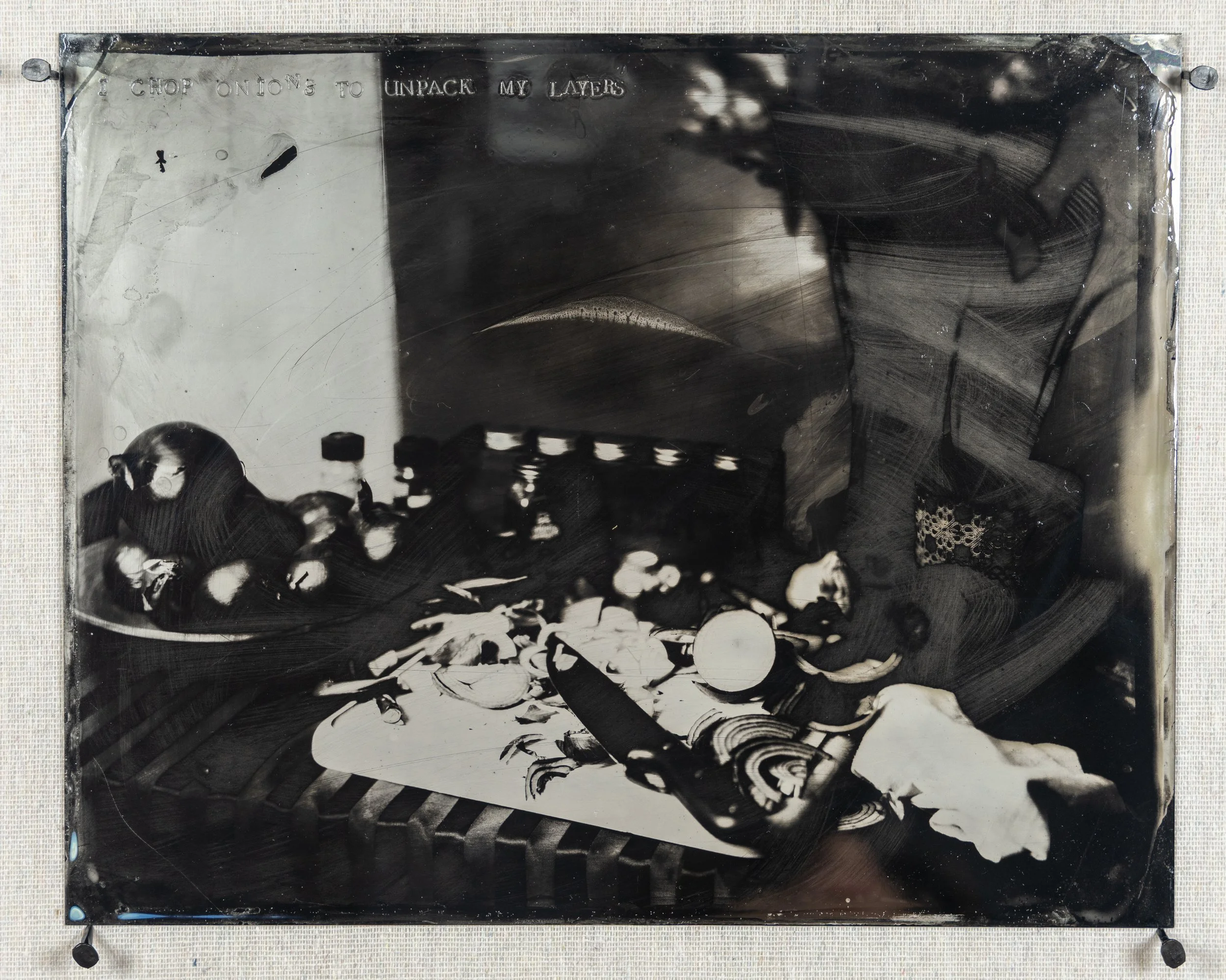
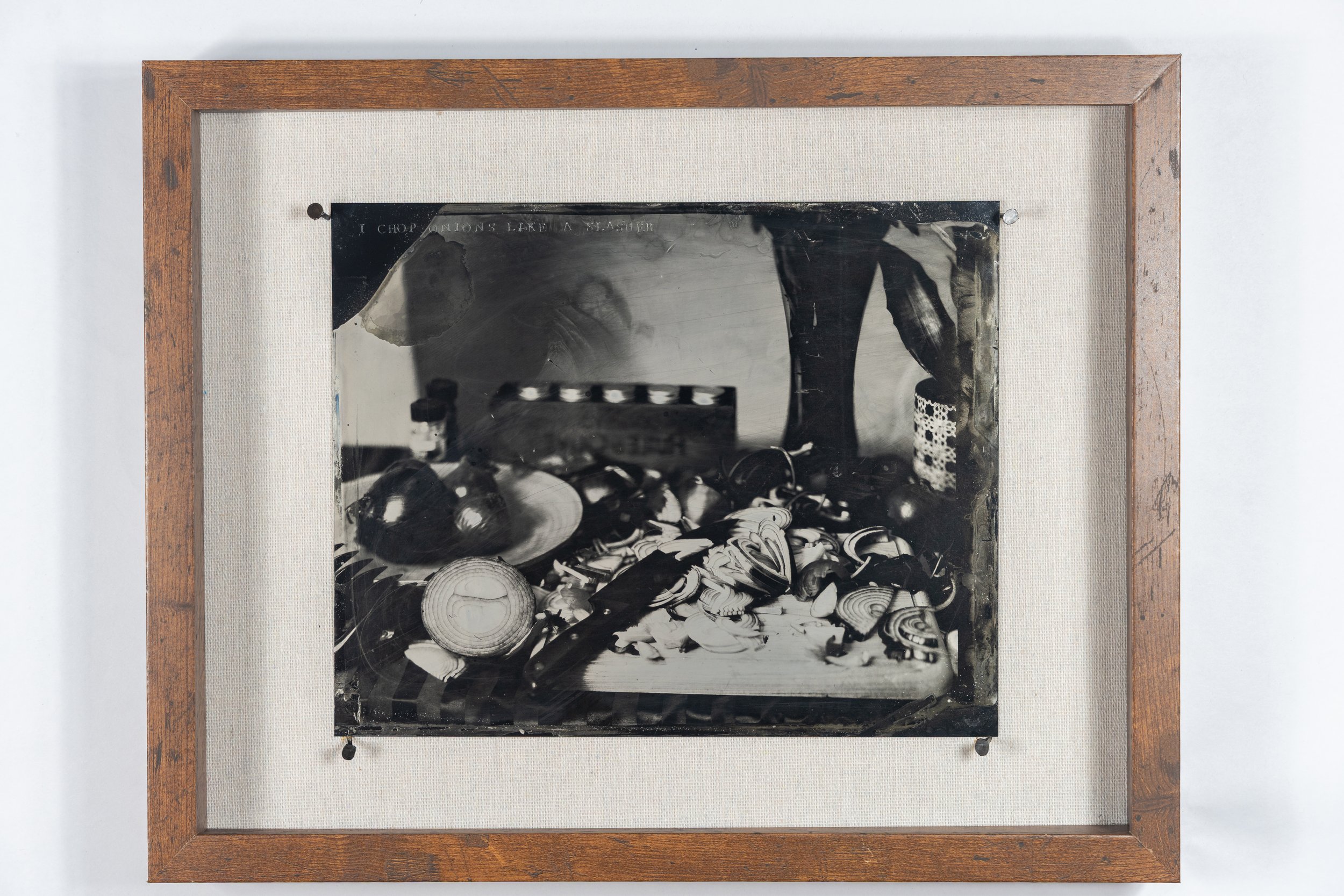
She unpacks all those layers. Sometimes, she chops onions into very thin slices, a meditative act. Other times, she chops onions fiercely, in an attempt to release her anger.
Her family doesn't suspect a thing. They enjoy the meals: every onion pie, every onion soup, every grilled onion.
Her name, Amelia, is a reference to a Brazilian song Ai, Que Saudade da Amélia (Oh, How I Miss Amélia), by Ataulpho Alves, Mario Lago, Noca da Portela. In the song, a poetic voice mourns for Amelia. He affirms that Amelia is a real woman because she has no vanity, unlike the woman he is currently with, who has so many demands. Thus, a perfect and real woman for the poet is one that obeys, who has no voice to nag him, just like Amelia.
This series was made with wet plate collodions, also called tintypes, on aluminum plates. That is a 19th-century photographic process, where a glass or metal plate is coated with a light-sensitive collodion emulsion. The photographs for this body of work were taken using an 8x10 large-format camera. The coated metal plates were exposed on camera. Afterwards, I engraved letter by letter, materializing Amelia’s whispers.
Tintypes are rare, like the precious home Amelia cares for. They require arduous labor, like the unwaged housework Amelia does, taking care of her family, making their lives run smoothly, so that when they get home, they can rest and enjoy.
But Amelia asks herself - Who takes care of the caregiver?